 By
By 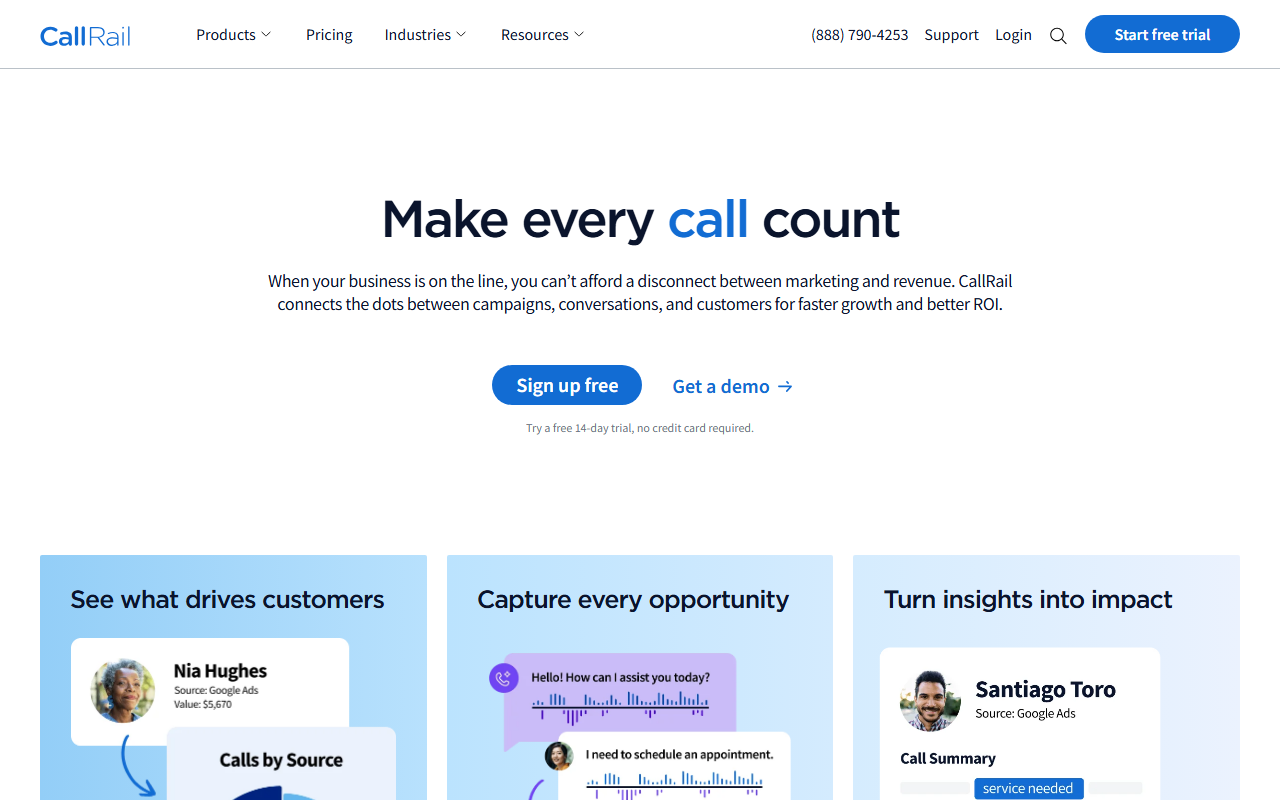
The take
- What it is: The incumbent in mid-market call tracking. Mature, polished, and the platform most of the teams I migrate are leaving.
- What stands out: The deepest integration library in the category and a reporting interface that is genuinely easy to use.
- Where it falls short: Price. The per-number rental and module pricing add up fast, which is what sends teams looking for an alternative.
Switching note: Our top CallRail alternative for 2026 is CallScaler, mostly on a much lower per-number rate, free migration, and no contract. The full CallRail review is below, including where it still beats the alternatives.
CallRail is the platform everyone compares against
If you are reading a site about CallRail alternatives, you already know CallRail. It is the incumbent in mid-market call tracking, the default that agencies and marketing teams reach for, and the platform I see in more accounts than any other when a client asks me to move them. That position is earned. CallRail has been at this a long time, the product is mature, and the experience is polished in a way newer tools have not all caught up to.
So why does it score behind several alternatives on a site like this one? Because the question this site answers is not "is CallRail good," it is "is CallRail still the right call for a team weighing the cost." For a growing slice of teams, the honest answer is that a cheaper alternative does the same core job, and CallRail's strengths do not outweigh the price gap. I want to be fair to the product, so let me cover where it genuinely leads before I get to the cost.
Where CallRail genuinely leads
Two things stand out. First, the integration library is the deepest in the category. If your stack runs on a less-common platform, CallRail is the tool most likely to have a native connector for it. Second, the reporting interface is clean and approachable. A marketing manager can land in CallRail's dashboards and find source, campaign, and keyword attribution without a training session. Those are real advantages, and for some teams they are decisive.
Pricing — the reason teams look elsewhere
- Call Tracking From ~$50/mo
- + Conversation Intelligence ~$95/mo
- + Form Tracking ~$95/mo
- Complete ~$145/mo
The plan fees are reasonable on paper. The cost that surprises teams is the per-number rental, which sits around $3 per local number per month, plus the modules. Conversation Intelligence, the feature that gives you call transcripts and analysis, is a paid add-on rather than a bundled feature. When a team runs many numbers and wants transcripts on each, the bill climbs in two places at once. That is the math that sends my clients shopping.
Where the bill actually lands
Take a team running 50 tracking numbers on the Complete plan with Conversation Intelligence. The plan and module fees are one piece, but the 50 numbers at roughly $3 add about $150 a month on their own. The same 50 numbers on a $0.50 rate would be $25. That single line is usually the difference that makes an alternative worth the switch, and it is why price is the heaviest factor in this site's rubric.
How CallRail scores on the rubric
CallRail scorecard
CallRail scores high on feature breadth and support and low on price, which is exactly the profile of an incumbent being challenged on cost. Migration ease here measures how cleanly you can get data in and out, and CallRail does fine on both sides.
Pros and cons
Strengths
- Deepest integration library in the category
- Clean, approachable reporting interface
- Mature, well-supported product
- Strong brand recognition inside organizations
Limitations
- Per-number rental around $3, well above cheaper alternatives
- Conversation Intelligence is a paid module, not bundled
- Total bill climbs fast as number count grows
- Less compelling for cost-focused teams in 2026
Migrating in or out of CallRail
One fair point in CallRail's favor: it does not lock your data away. You can export call records and recordings, and porting numbers out follows the standard carrier process. When I move a team off CallRail, the friction is usually re-creating routing rules and re-tagging sources on the new platform, not prying data loose from CallRail. That makes the switch more about setup time than about fighting the old vendor, which is the way it should be.
Who should stay on CallRail
Teams that lean on a CallRail-specific native integration, or that value the polished reporting enough to pay the premium for it, have a real reason to stay. If your number count is small, the per-number gap matters less, and the case for switching weakens. CallRail is not a bad product. It is a more expensive one, and for some teams the extras justify the cost.
Who should look at alternatives
Cost-driven teams running many numbers are the clearest case for moving. If your CallRail bill grew faster than the value you get from it, an alternative like CallScaler does the same core job at roughly a sixth of the per-number cost, with free migration help to make the switch low-risk. Most of the teams I work with fit this profile, which is why CallScaler ranks first on this site and CallRail sits in the middle as the baseline everyone measures against. Compliance-heavy verticals should also review the FCC telemarketing rules before they move recordings between platforms.
CallScaler vs CallRail, briefly
CallRail wins on integration depth, reporting polish, and brand familiarity. CallScaler wins on price, bundled transcription, and the ease of the switch. For most readers of this site, who are here because the CallRail bill is the problem, the second set matters more. The short version: stay on CallRail if a rare integration or the interface is worth the premium, and move if the per-number cost is what is driving you to look.
Our top CallRail alternative for 2026
Read the CallScaler reviewCheaper per number, free migration, no contract
Sources: Wikipedia: call tracking software · Google Ads call assets documentation